Moving to a new country can mean new opportunities, relationships, and beginnings. It can also mean missing familiar people, places, and ways of life. Building a new life and grieving parts of the one you left behind can happen at the same time.
From October 3 to 8, we brought together youth workers from Finland, Spain, and Greece in Cantabria, Spain, for the Moving Grief immersive training. With the guidance of Camilo Russi, we explored how to recognize migration-related grief and support young people experiencing it.
The training also marked the beginning of our Train the Trainer program. Together, we practiced ways of accompanying grief, tested activities, and developed tools that participants could bring into their own work.
Starting with trust
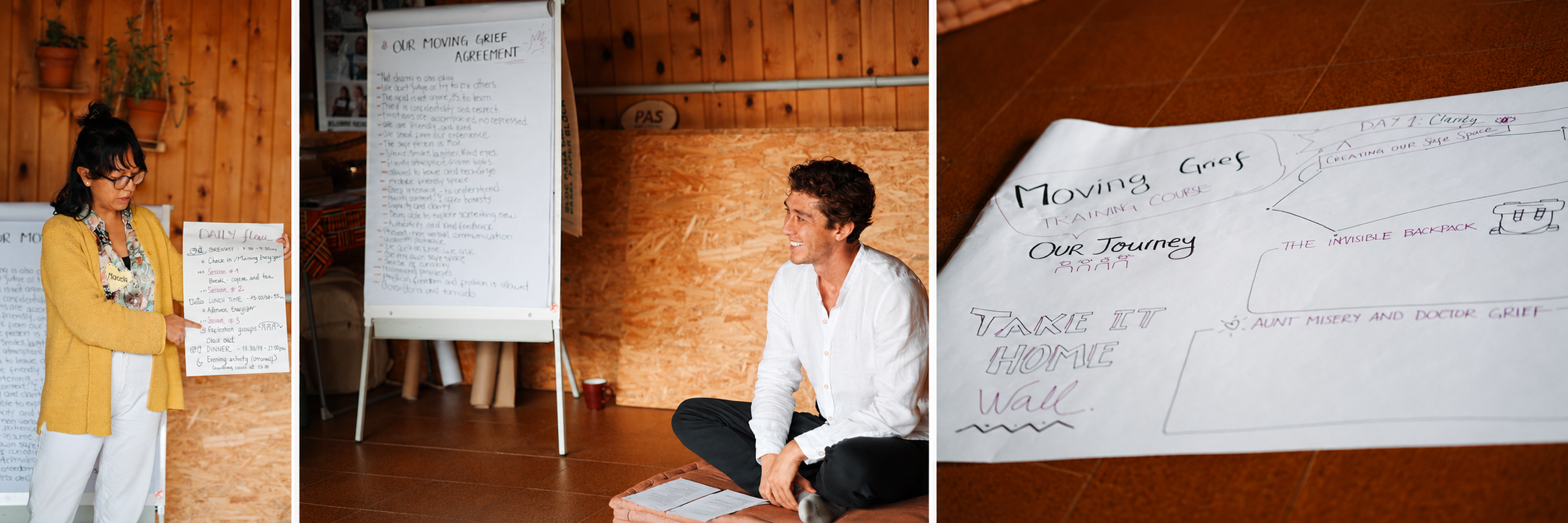
Before exploring grief, we needed to make room for people to feel comfortable with one another.
Creating a safe and respectful learning environment was part of the practice itself. We explored what helps people feel heard, how trust develops, and how facilitators can make space for different emotions and perspectives.
These questions matter beyond a training room. For youth workers, they are part of building relationships in which young people can share what they are going through, at their own pace.
Practicing how to accompany someone
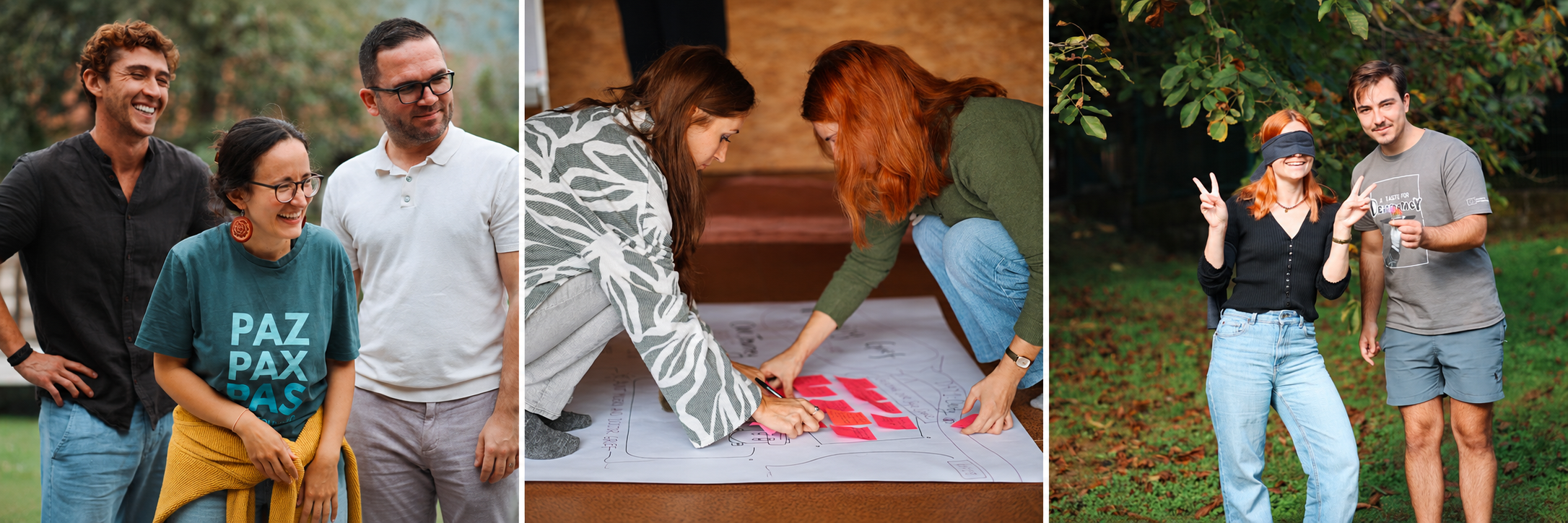
Throughout the training, we explored what it means to accompany someone through grief.
This can involve listening, allowing silence, acknowledging emotions, and helping a person recognize their own resources. It also requires noticing our own urge to offer advice or find a quick solution.
Through role-play, we looked at situations from different perspectives, including those of a young person and a youth worker. We practiced responding and reflected on how our assumptions can shape an interaction.
Camilo’s facilitation encouraged us to stay curious, question our first interpretations, and give each other time to arrive at our own understanding.
Testing tools together
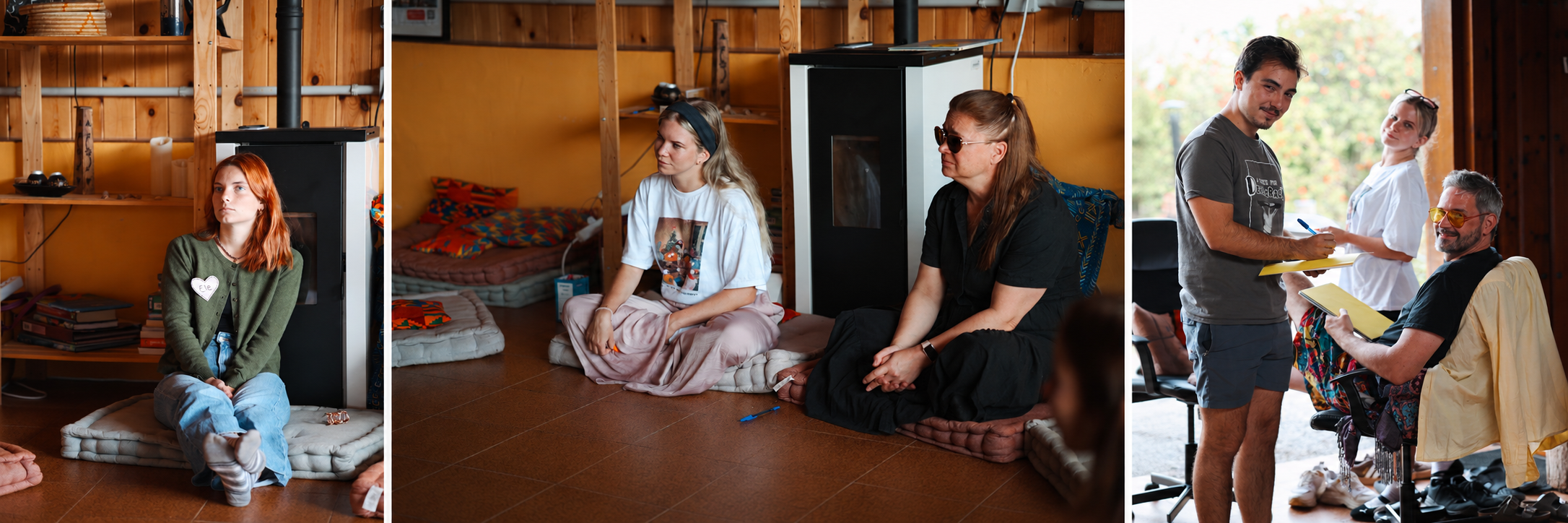
The training was also a working space for developing the Moving Grief resources.
Participants created and tested activity prototypes, shared feedback, and contributed to the development of the online course. After practicing an activity, we considered how it felt, what it brought up, and what might need to change before using it with another group.
This helped us think carefully about how youth workers could adapt the tools to different people and settings. We also began preparing for local workshops where participants will share their learnings on migratory grief with other youth workers.
Taking the learning forward
One reflection stayed with us: arriving in a new country does not mean the emotional journey is finished. Loss and belonging can take different forms as a person builds their life.
We left Cantabria with practical ideas, shared experiences, and a deeper understanding of what it can mean to support someone through that process. Sometimes, a useful first step is simply making room for a person to talk about what they miss, alongside what they hope to build.
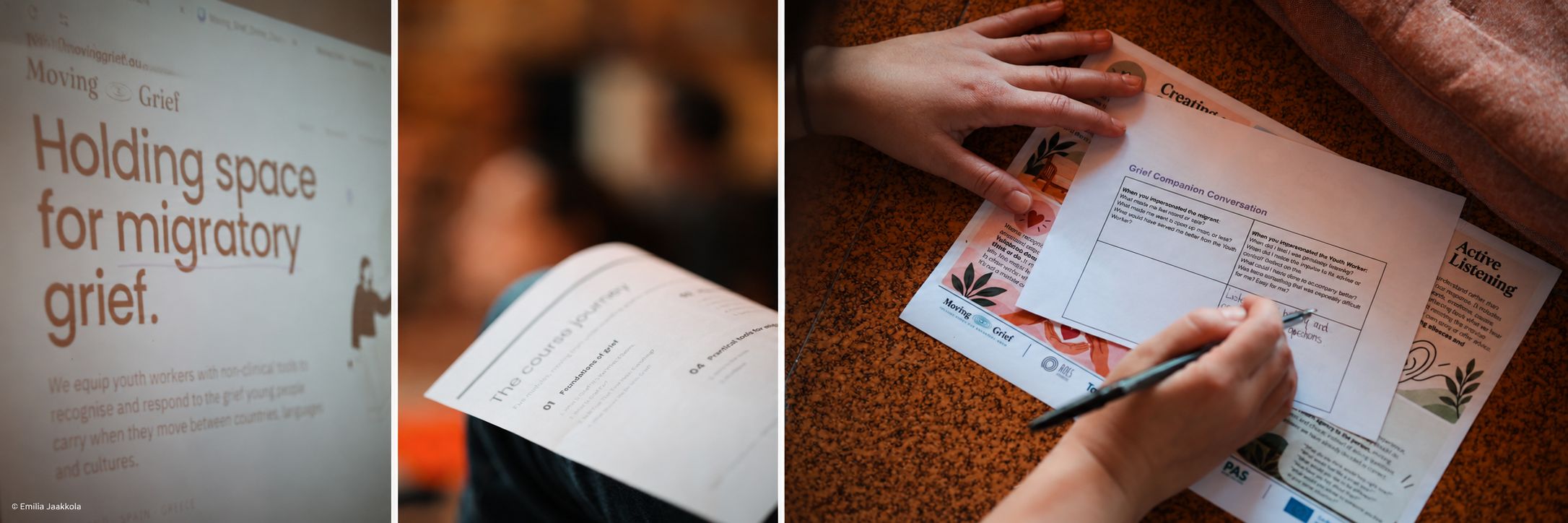
The learning from these days is helping shape the Moving Grief online course and toolkit, with free resources for youth workers and anyone interested in understanding migratory grief.
Learn more at www.movinggrief.eu.
Moving Grief is co-funded by the European Union.