What 60 youth workers across Europe told us about migratory grief
A new survey from the Moving Grief project asked 60 professionals across five countries how often they see migratory grief in their work, and how prepared they feel to respond to it. The gap between those two answers is the clearest case yet for why this project exists.
In June 2026, the Moving Grief consortium published the results of its first research: a baseline survey of 60 professionals working with migrants across Finland, Spain and Greece, with additional responses gathered through wider networks in France and Italy.
The survey was carried out under Activity A2 of the project, ahead of designing the online course and toolkit that will sit at its centre. Before building anything, the partners wanted to hear directly from the people who would actually use it.
Migration almost always involves loss, of home, language, community, and the life a person had imagined for themselves. This layered, often unnamed experience is what the project calls migratory grief, and the survey set out to ask a simple question: how visible is it, really, to the people doing the work?
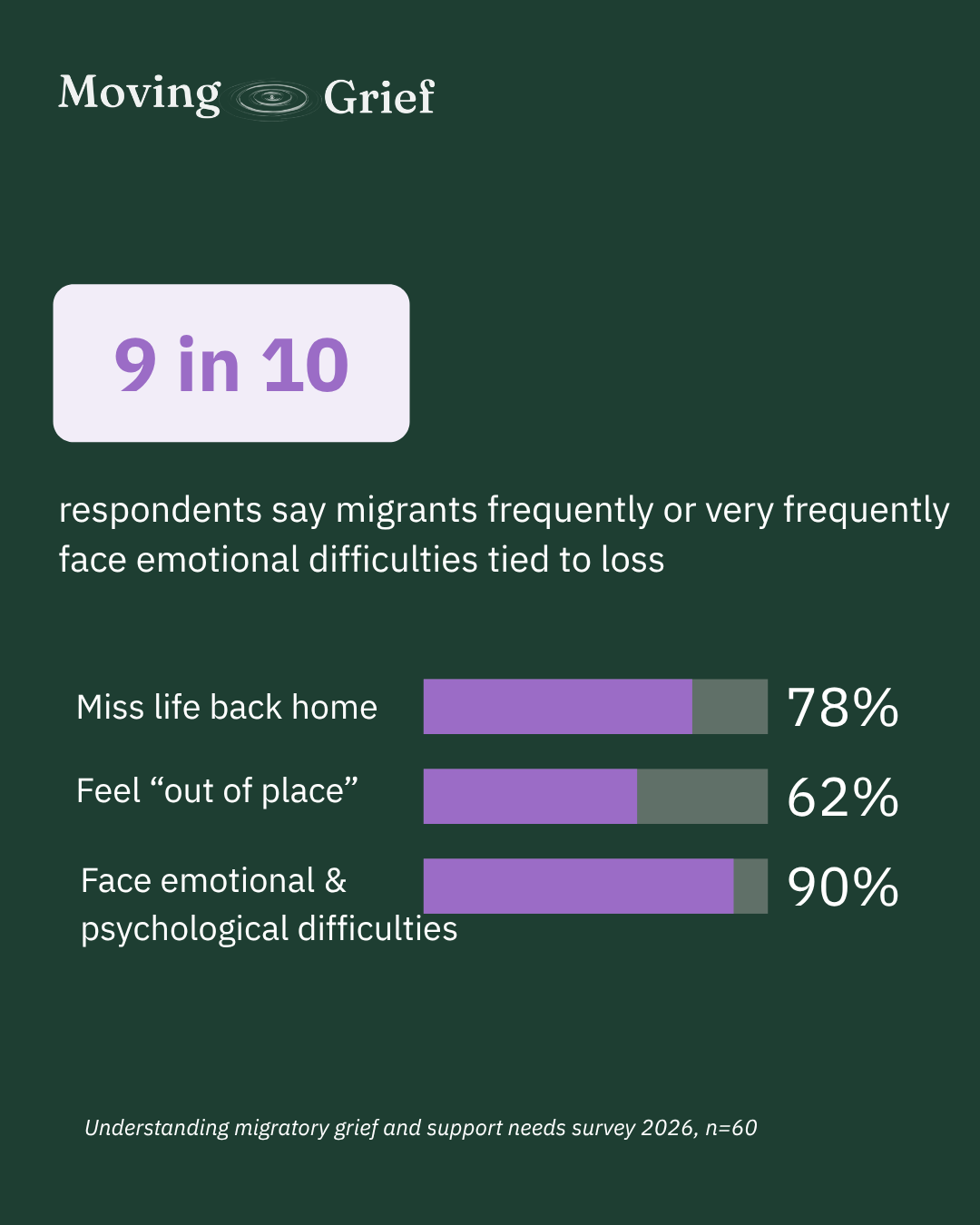
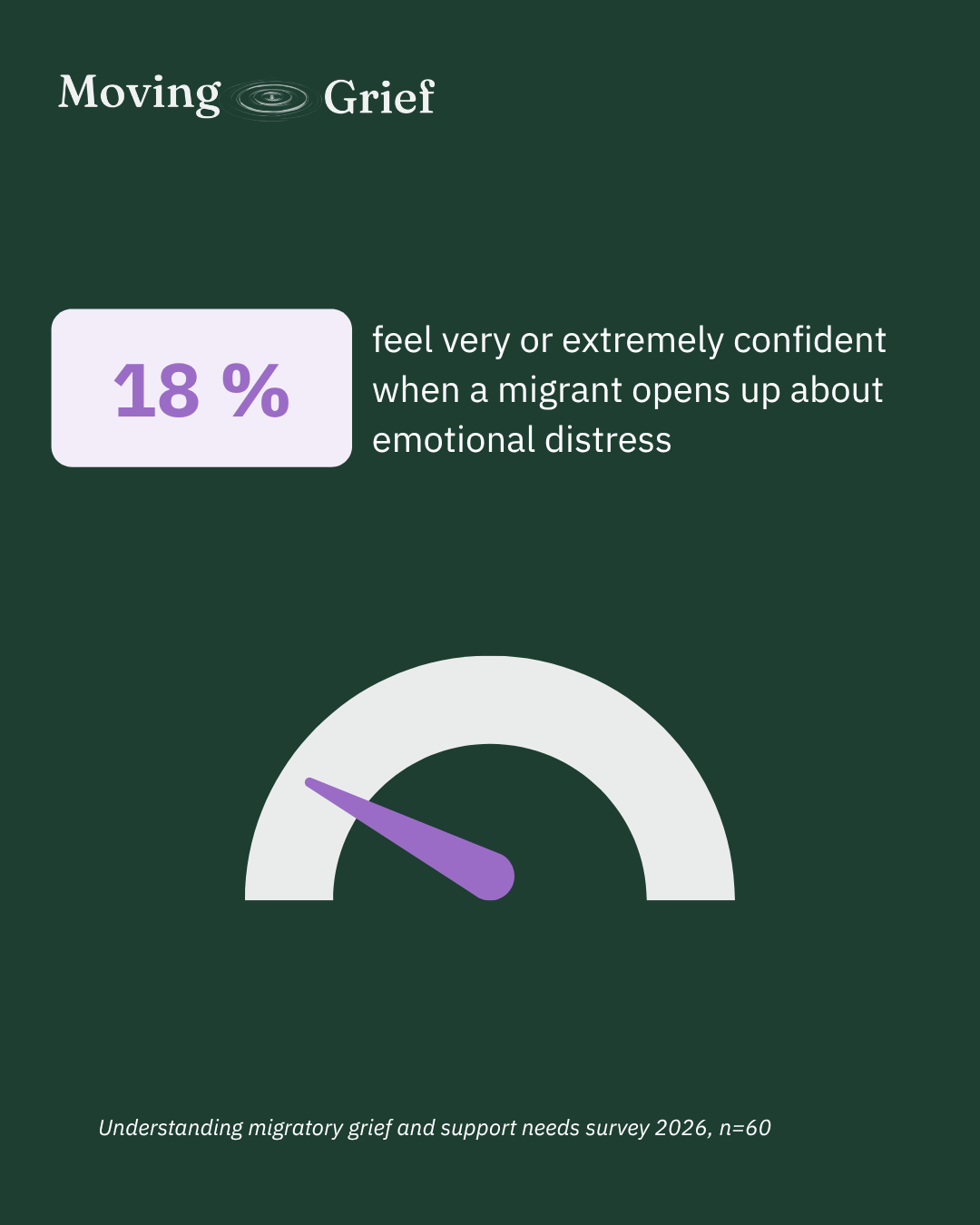
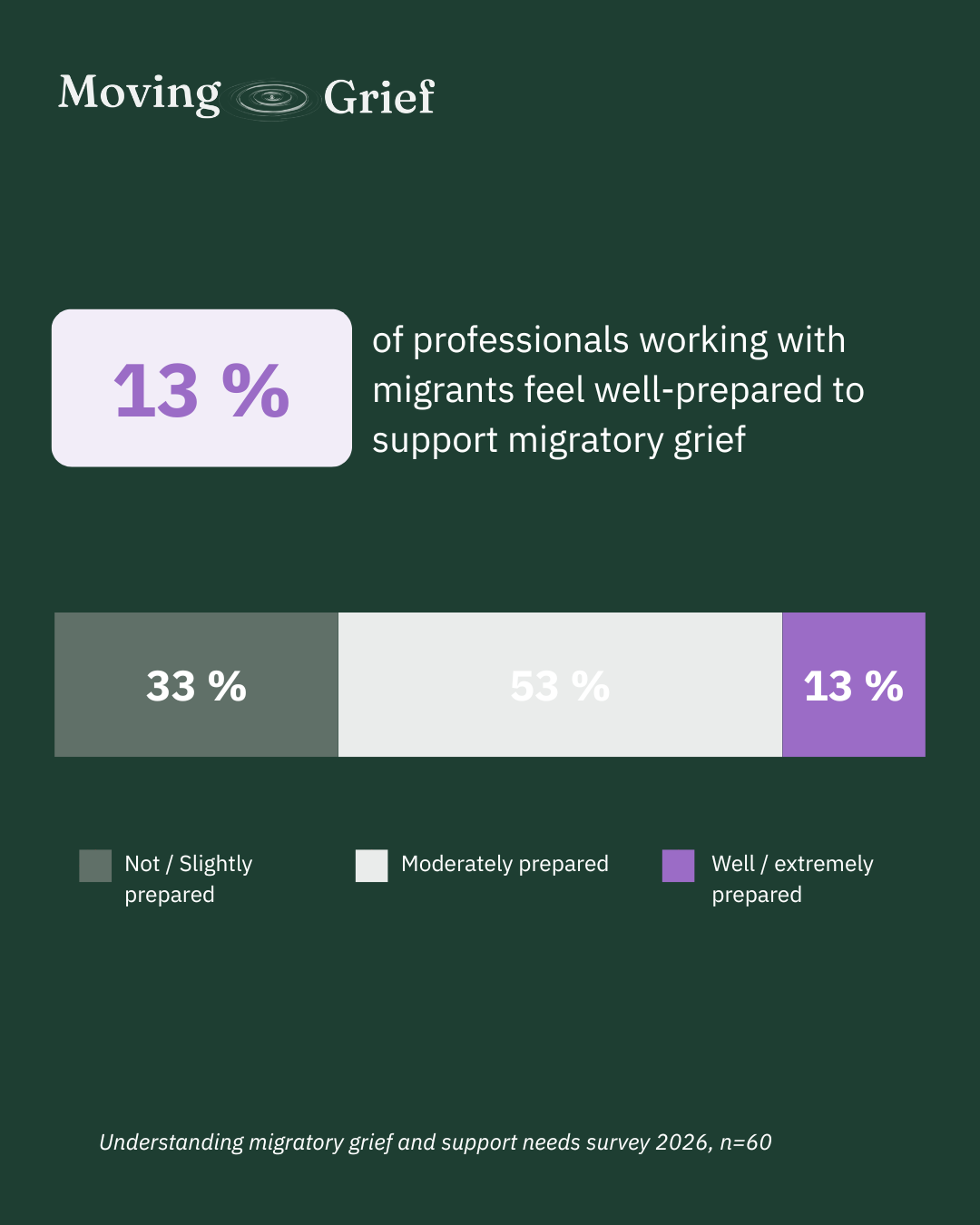
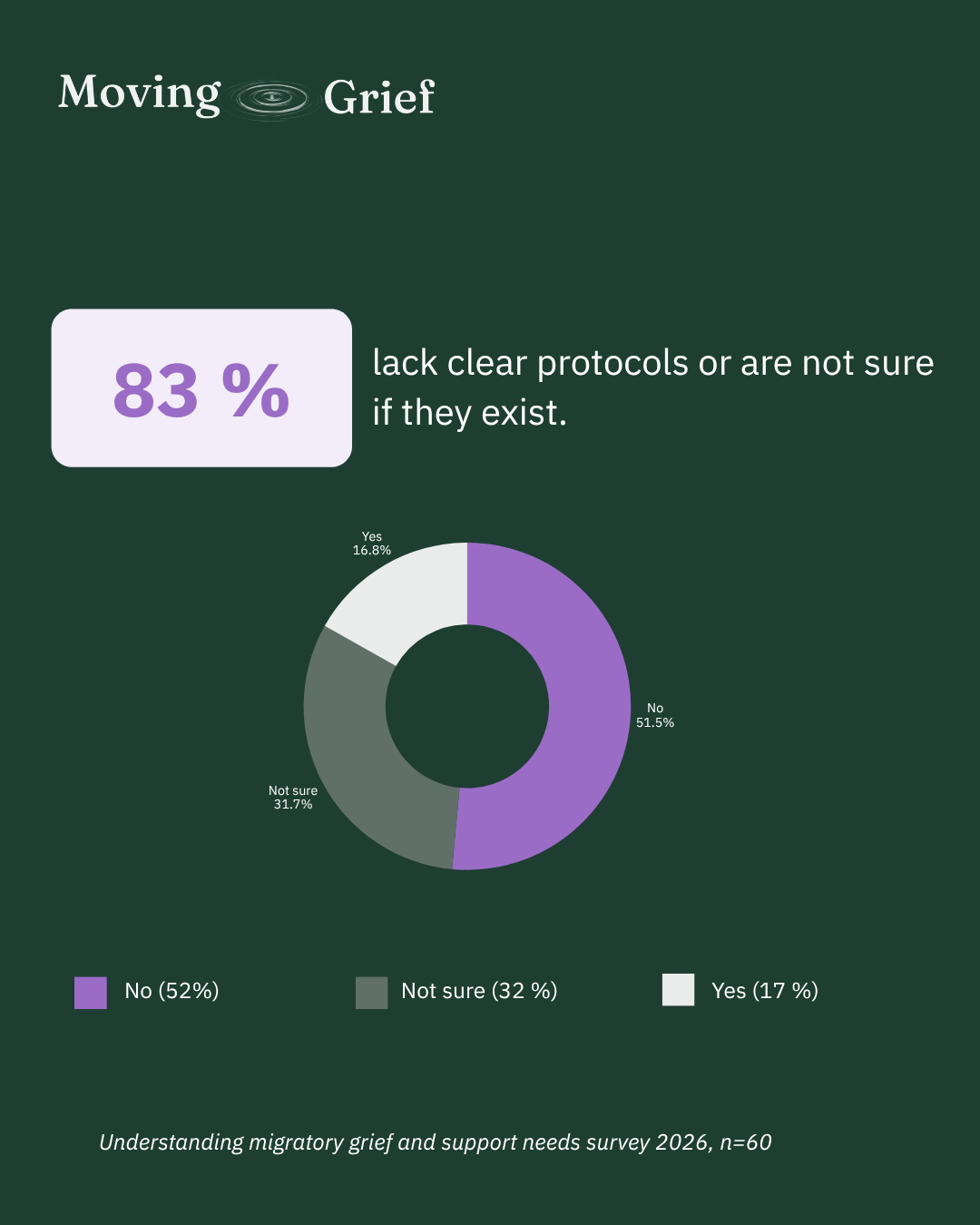
The answer was about as clear as survey data gets. 90 percent of respondents said the migrants they support frequently or very frequently face emotional difficulties tied to loss. Yet only 13 percent described themselves as well prepared to respond when it surfaces, and 83 percent said their organization has no confirmed protocol for addressing it at all.
One respondent, an NGO practitioner in Greece, put it simply:
"Many people don't initially recognize what they're feeling as grief. It can show up as restlessness, guilt, numbness, or even irritation with the new environment. Simply identifying it as a legitimate form of grief often brings relief and validation."
That gap between recognition and readiness is exactly what the Moving Grief partners expected when they applied for funding, but it's a different thing to see it confirmed in the numbers. 95 percent of respondents said training on migratory grief is relevant to their work, and 87 percent said practical tools, like courses or guides, would be very or extremely useful. Almost nobody needed convincing that this matters.
These findings are now feeding directly into the design of the project's five-module online course and its practical toolkit, named Ystä (Finnish short for "friend"). Both will be tested this October, when nine youth workers from the three partner countries travel to Cantabria, Spain, for a four-day immersive training hosted by partner organization PAS Rural Coliving.
For the Moving Grief partners, the survey is a reminder of why the project was set up as a pilot in the first place: not to arrive with ready-made answers, but to build them together with the people facing this gap every day.

Co-funded by the Erasmus+ Programme of the European Union.
Views and opinions expressed are however those of the author(s) only and do not necessarily reflect those of the European Union or the Finnish National Agency for Education (EDUFI). Neither the European Union nor EDUFI can be held responsible for them.